On October 16, a wildfire burned right up to the back fence of a family's home in San Juan Capistrano. The house is still standing. The family had been Stand customers for five weeks.
This is the story of what Stand did for that family in the hours and days that followed, and how our science, run weeks before the fire, had already shown us how it would unfold.
Part 1: What Stand Did for the Family
We flagged the fire at noon
October 16 was a Red Flag day across Southern California: Santa Ana winds, humidity as low as 8%, temperatures near 90°F. Stand already had All Risk Shield (ARS), our wildfire response partner, patrolling the neighborhoods where our customers live.
Just after noon, the team spotted a problem: the Norte Fire was 50 to 70 acres, moving fast through dry brush, and about a mile from a Stand home. Within minutes, ARS had a crew on the way.
"It made a bit of a difference, because we could mobilize a team faster to that location."
Sean Griswold, Chief Claims and Customer Experience Officer at Stand
We got to the house
The fire grew to 465 acres in under three hours. Roads were closed and traffic was at a standstill. ARS kept working its way in, and just after 4 PM the crew was inside the evacuation zone and standing in the family's backyard.
The home was standing. The hillside behind it had burned right to the fence.
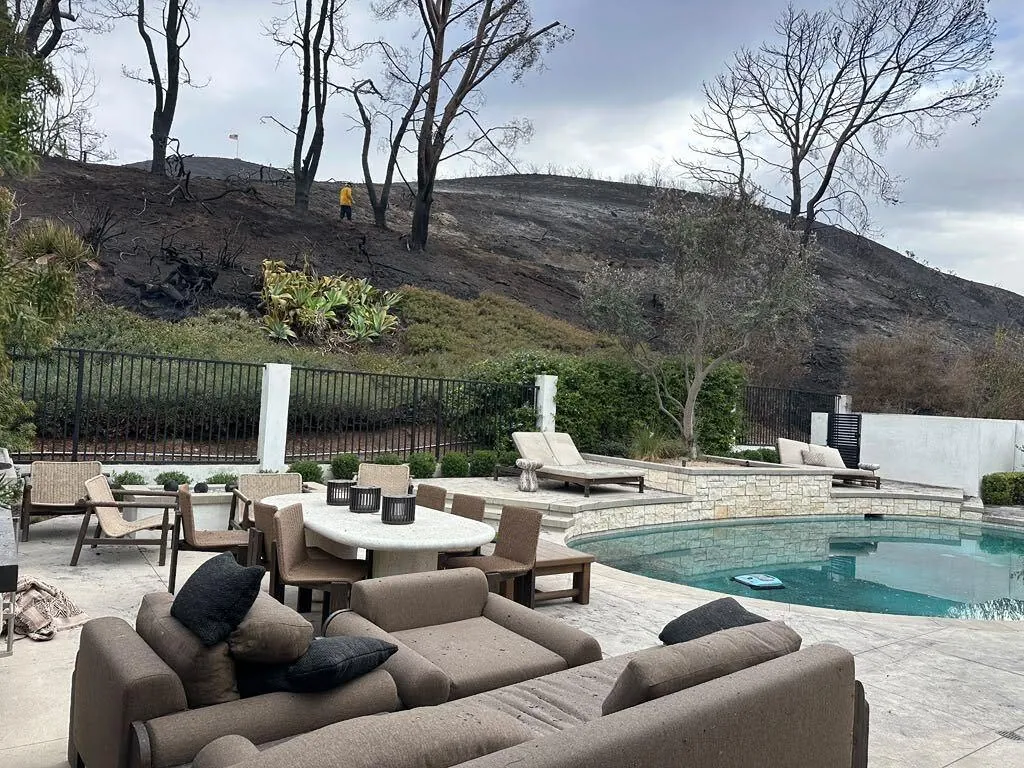
The crew didn't leave. They pumped water from the pool, soaked the perimeter and moved patio furniture away from smoldering ground in case the wind pushed the fire back. They hunted down hotspots into the evening and came back the next morning to check again.
Deployment and property access subject to safety conditions and official restrictions. Services cannot be guaranteed in all circumstances.
We called the family
Minutes after the crew reached the house, Sean Griswold, Chief Claims and Customer Experience Officer, called the homeowner. Our first priority was always the family's safety, but sharing the news that their home was safe, and that someone was already on-site guarding it, delivered the peace of mind that comes with being a Stand customer.
We started the recovery
The evacuation was lifted on October 18. That same day, a smoke remediation crew was inside the home installing four air scrubbers. Estimators and cleaners followed. A claim for smoke damage and outdoor furniture opened the next day, and Stand, the claims adjuster, and the remediation vendor have been in touch with the family every day since.
"Stand has been amazing so far… They've arranged all the remediation for the property."
The homeowner
None of this depended on anything the family had done. Their policy was five weeks old, but Stand is there for customers from Day 1.
Part 2: What Our Science Saw Coming
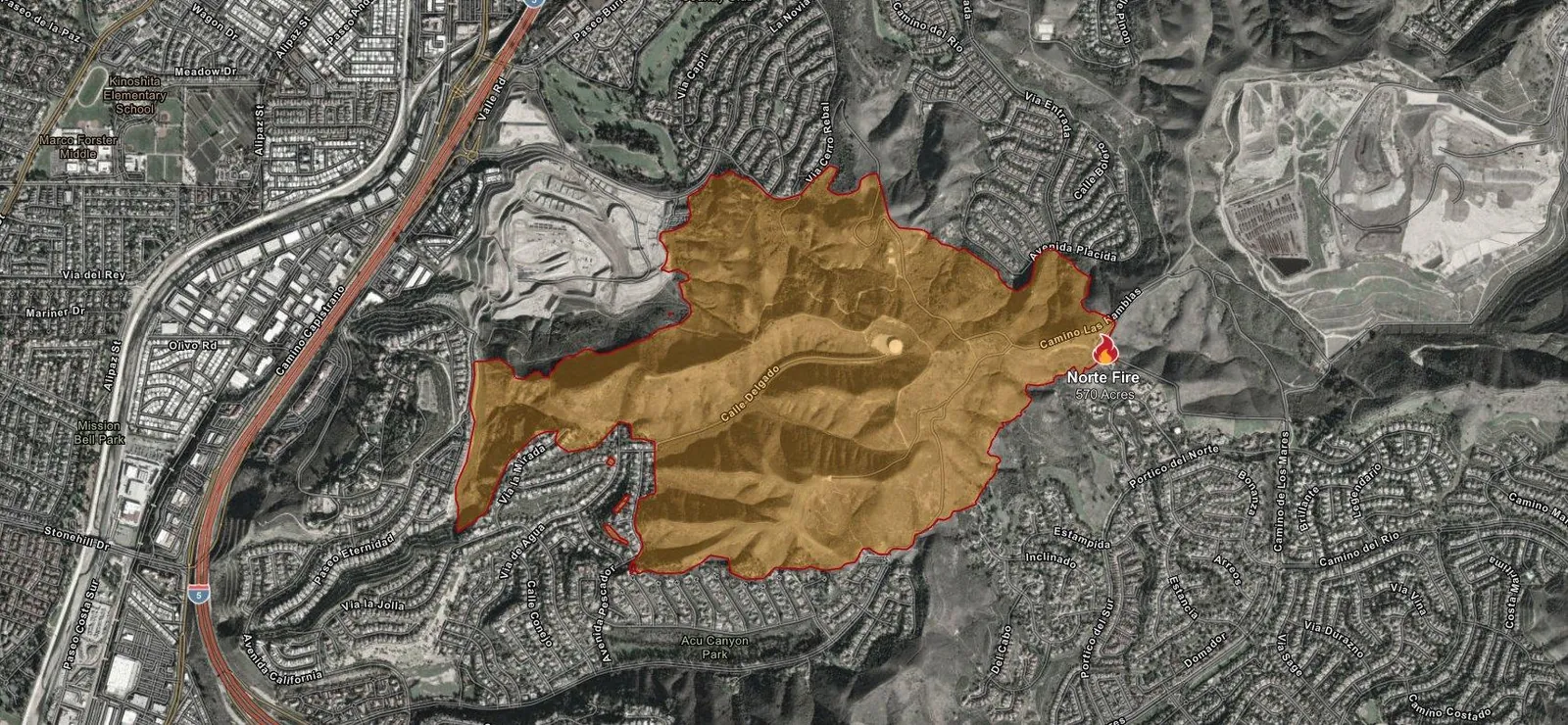
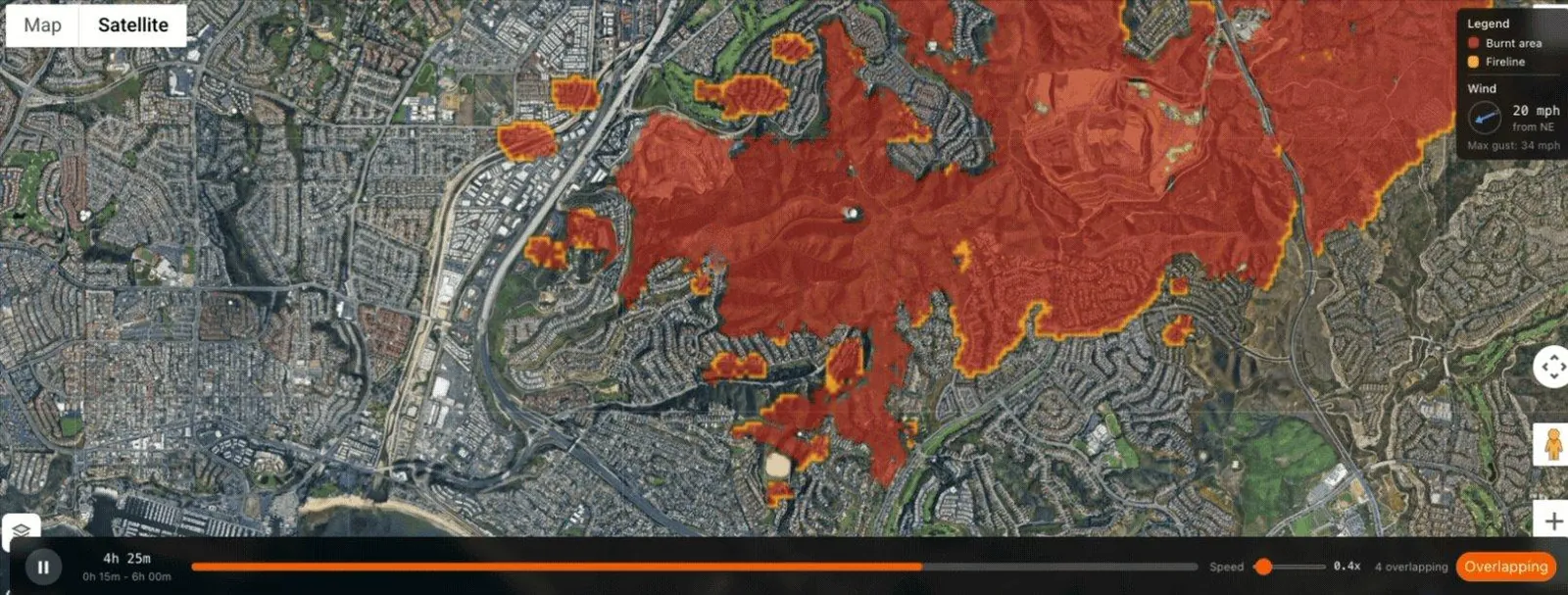
When Stand quoted this home in September, we simulated how a wildfire would reach it. On October 16, the Norte Fire matched one of the ignition pathways we simulated.
"We found remarkable agreement between the event outcome and the ignition pathways that were predicted by our simulations."
Matt DiStefano, Chief Science Officer at Stand
Every home Stand quotes gets two physics simulations. First, we light dozens of virtual fires across the land around the home, under Red Flag winds, and see which ones reach it. Then we zoom in on the home itself: its slope, its plants, its neighbors, and how heat and embers would actually get to it. The Norte Fire started on a Red Flag day, the exact conditions we simulate.
The fire followed a pathway we had modeled
On top is the real Norte Fire, as mapped by Cal Fire. Below it is what our model predicted for this home weeks earlier. The fire ran the same direction, took the same shape, and even threw embers ahead into the same neighborhoods.
The hillside burned. The house didn't.
Our close-up model predicted the fire would run along the hill behind the house, parallel to the street, rather than downhill into the home. The neighbor's video shows exactly that: flames moving right to left across the slope. The photo in Part 1 shows the result: scorched hills right up to the fence, and an untouched yard and house.
Why It Matters
For brokers, this is what they can tell a client: in this fire, Stand responded while the customer was still evacuated, and our simulation at quote matched how the fire moved. That is insurance that intervenes.
For Stand, this was the first time a wildfire tested our model on a home we insure. We had already validated the model against past fires: in the 2025 Palisades, Eaton and Thompson fires, it predicted which homes survived with 84% accuracy. The Norte Fire was the first live test. It reached a home we quoted weeks earlier, and its path matched the ignition pathways we simulated. The model held up, giving us even more confidence in it and our ability to protect homeowners.