What is a World Model?
World models encode a representation of an environment, sampled from sensors like imagery, video, text, and LiDAR, and predict what happens in that environment next.
The challenge is dimensionality and complexity. A textual LLM predicts one token along a single dimension. A world model must predict the next state of an entire environment.
Several labs and companies have made real progress. Google's Genie predicts trajectories that extend into real-world environments. World Labs' Marble generates worlds from one or several image prompts.
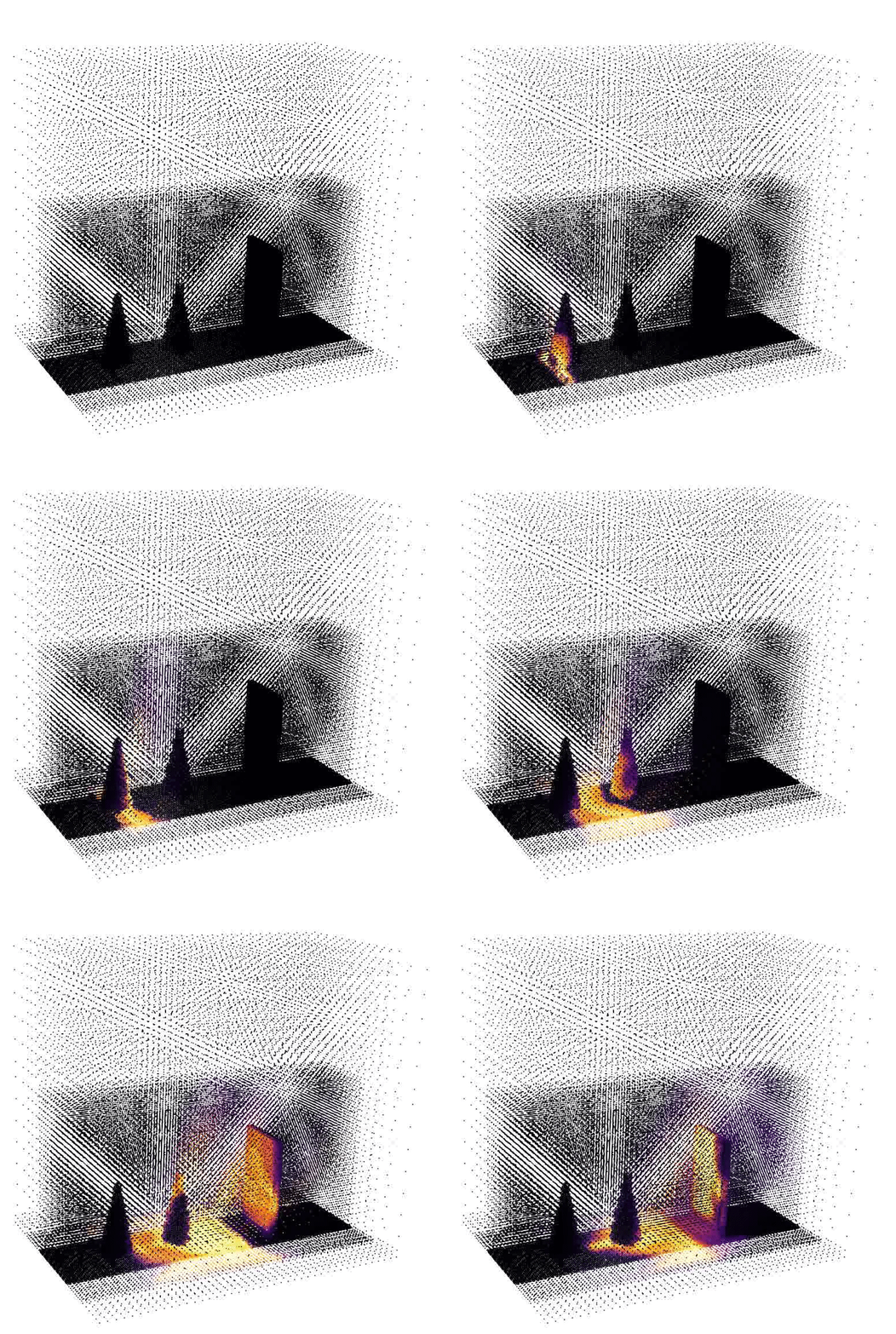
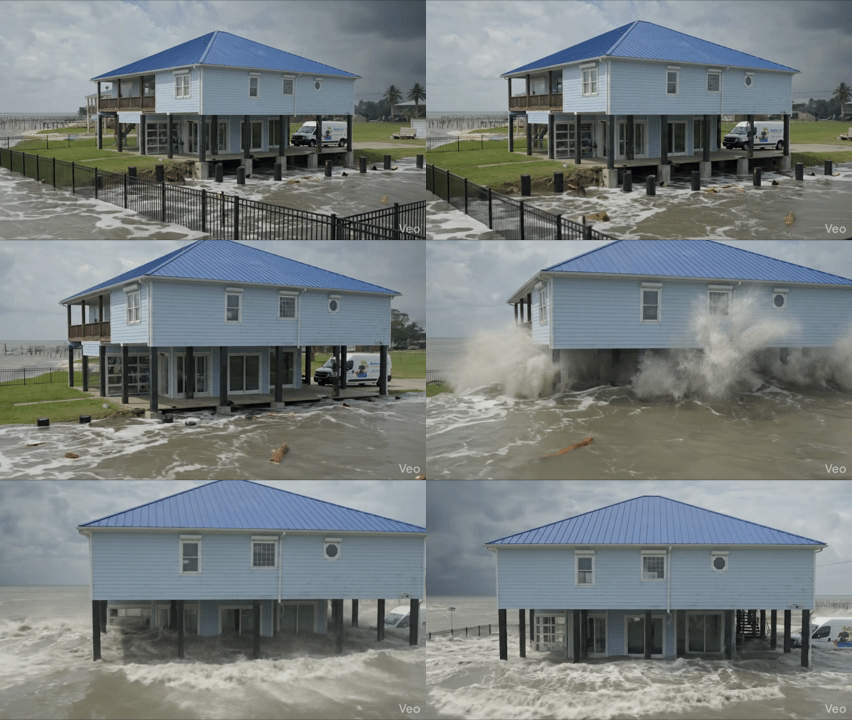
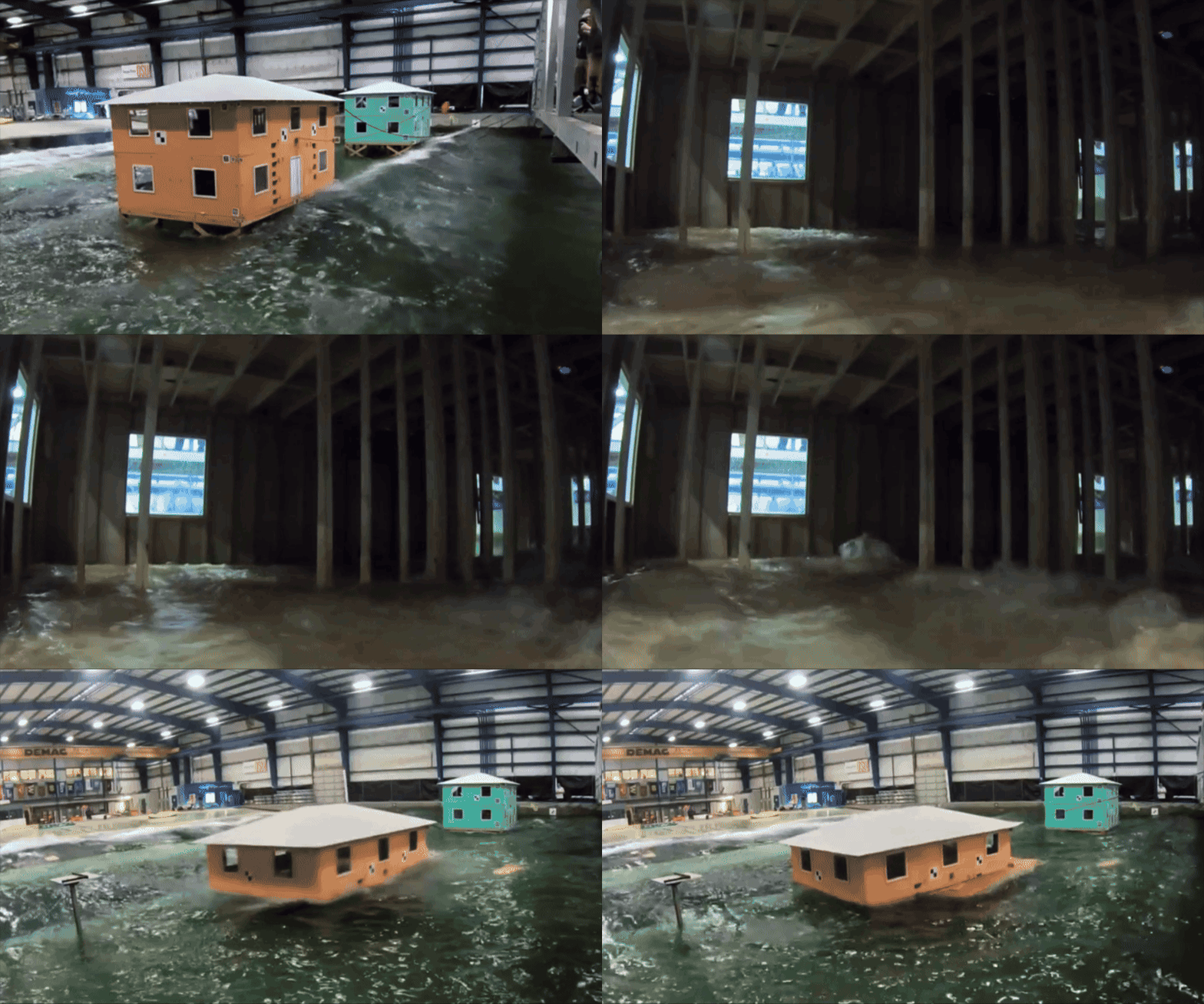
But these models produce bounded visual representations without grasping the underlying physics. The output looks visually convincing to the human eye, much like movie animation, but the physical realism is missing. This is especially true of cascading events: like the propagation of fire or a storm surge knocking down a home. In a video game, something may catch fire, but will that fire faithfully cascade and spread to neighboring objects and propagate unabated? Seldom. It is a similar concept here.
What works for robotics training or gaming engines falls short when the task is understanding how catastrophic events damage homes, structures, and infrastructure. That gap is what motivates a specialized world model built on high-fidelity physics.
Simulation for Asset Protection
The natural world is largely characterized by equations relating variables to one another. For instance, the movement of heat, the propagation of waves, the flow of fluids. These relationships between variables and their rates of change are what are known as partial differential equations (PDEs).
For 75+ years, the scientific and engineering community has used computer-based PDE solvers to simulate these physical relationships. This has in turn transformed how we comprehend the physical world, steadily replacing expensive, less versatile, manual tests like wind tunnels with in-silico environments orders of magnitude cheaper to run.
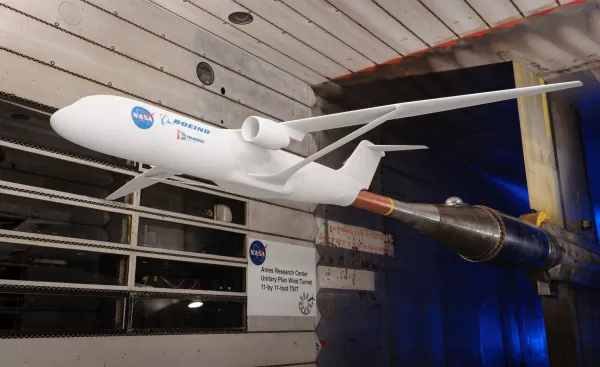
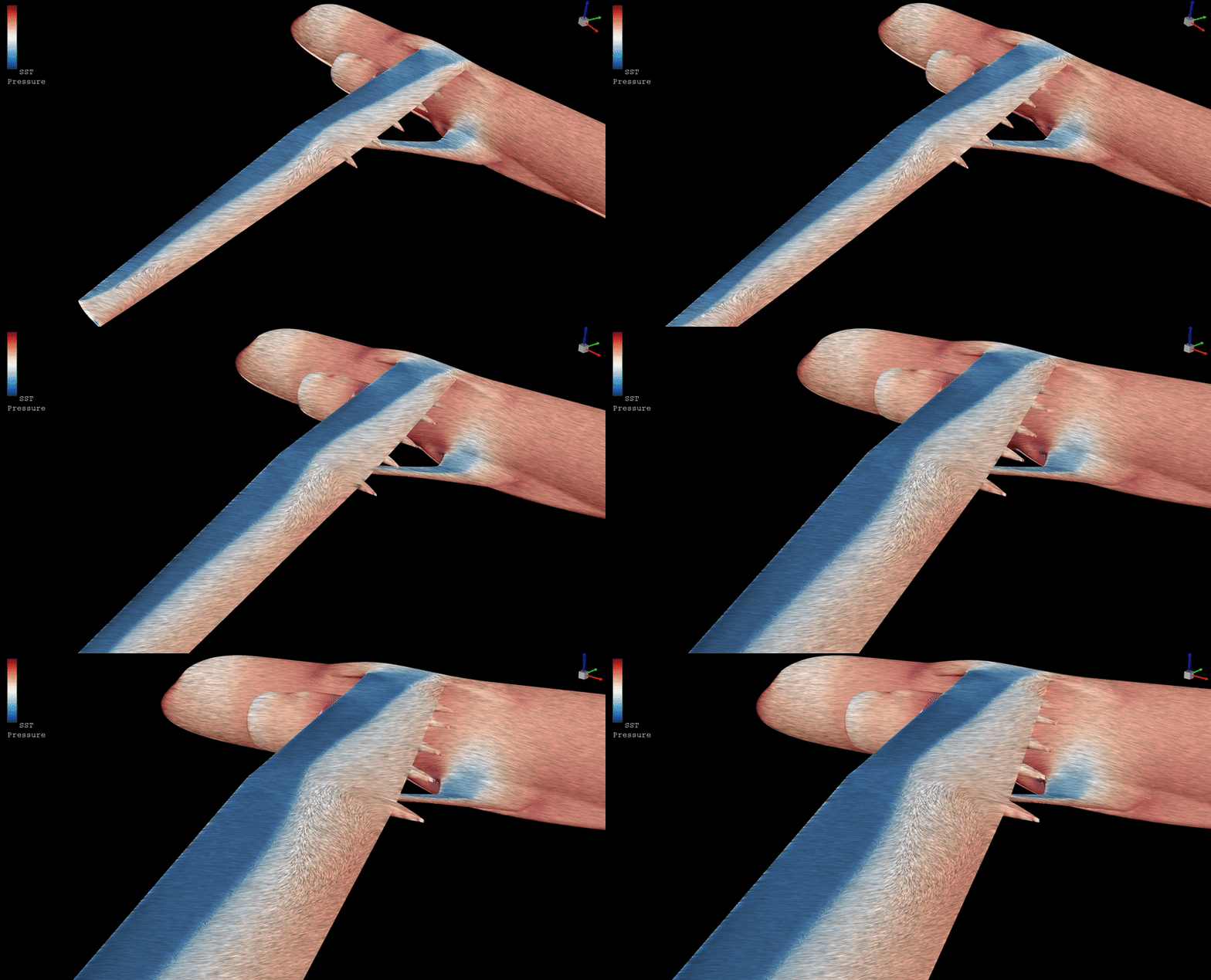
From our founding, we intended to democratize and further spread the use of physics simulation outside of traditional applications like aerospace. Specifically, we wanted to leverage physics-based models to assess the built environment.
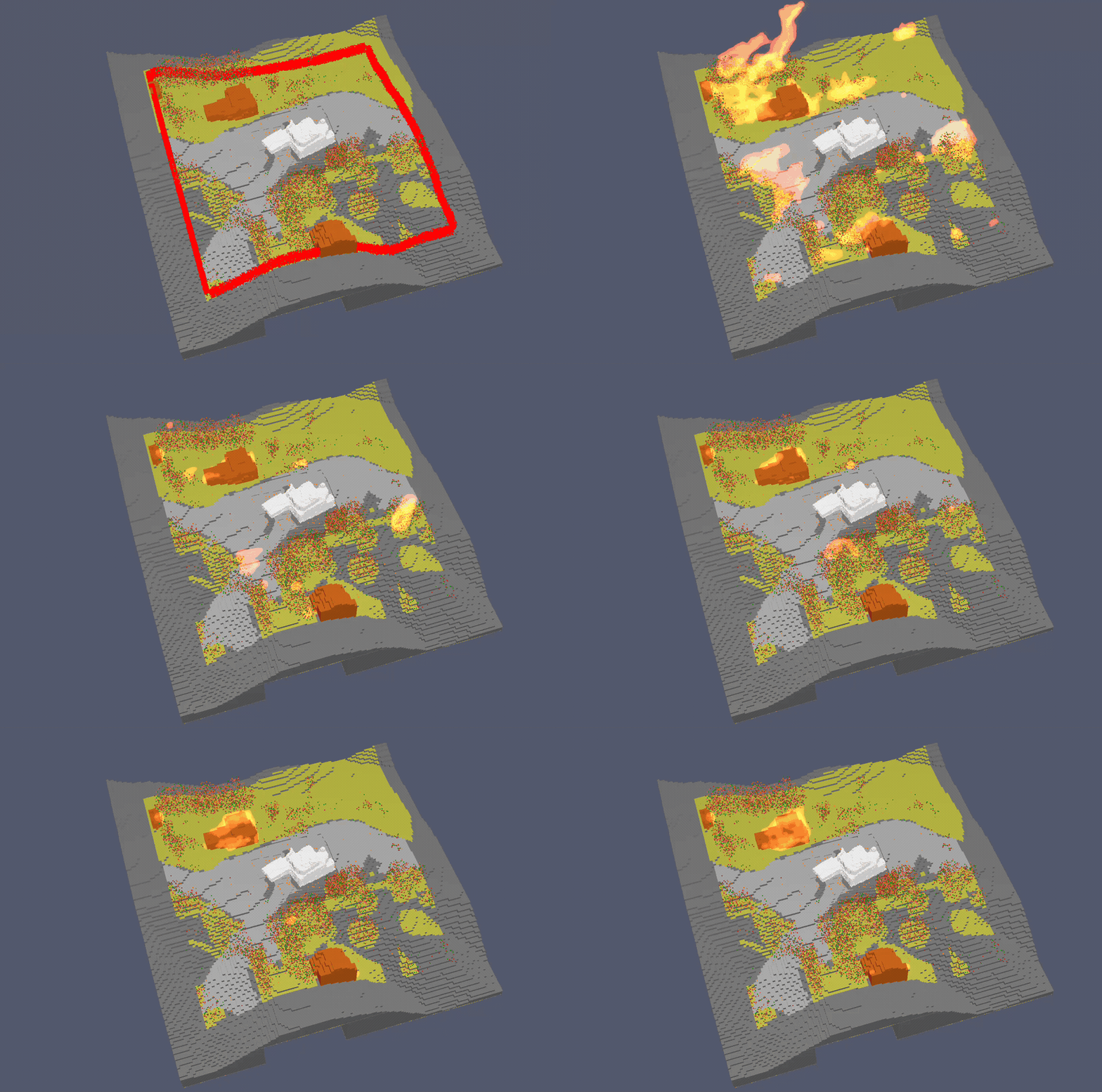
At Stand we use high-fidelity PDE solvers at scale to capture how catastrophes propagate and interact with assets, as a way of simulating the event before it happens, assessing the risk, and partnering with the owner to make the asset safer.
We can also price the risk more accurately than was possible with statistical insurance models (which rely on old loss data that's increasingly less relevant in a world with intensifying disasters), or location based cat models (which only consider a region's risk but not the details of the asset and its unique qualities).
As a result, we are able to offer a property owner a policy that is more competitive because we account for their direct mitigations, and establish a fortuitous incentive structure: we get a safer and more profitable book of business, the owner gets access to more affordable insurance (and a direct financial incentive), and we can properly guide owners to make structures and assets safer in the wake of increasingly severe catastrophic events.
But PDE simulations are computationally expensive and can be slow to run. So for us the question was: can we create a model fast enough to simulate and underwrite millions of homes, but accurate enough to recreate how catastrophic events interact with homes, including the propagation and cascade of damage? This motivated our push in the AI-Physics realm.
The Complexity of AI & Physics
PDE solvers are constrained. Roll a marble across an uneven floor, and two runs of the same solver produce identical paths. That consistency is comforting.
Generative AI is approximate: it infers a solution to an under-constrained problem, coming up with answers without tracking the extensive variables a PDE solver does. A useful parallel is weather forecasting: forecasts don't solve the full atmospheric equations at every cubic meter of sky: they couldn't, not in time to be useful. They approximate, and the result is good enough for tomorrow but degrades by day seven.
AI physics models make the same bargain, distilling the governing equations down to fewer variables to gain speed, and accepting that some information gets left out.
The speed benefit is extreme: AI can predict the marble's path orders of magnitude faster than a PDE solver. The cost is precision: because the model is under-constrained, each state transition introduces error based on the previous state. Over time, that error compounds and the model drifts from the PDE solver, which itself is the closest approximation to the true solution.
Drift is tolerable when timescales are short or the system is relatively steady, or unchanging with time. As luck would have it, the systems we care about for risk are neither.
Two categories matter here. Steady-state systems settle into equilibrium after initial dynamism: water flowing through a pipe once the faucet is open. Transient systems change continuously with time, and they're where modeling gets hard.
Transient physics also rarely comes in one flavor. We need to simulate fluid flow through a medium (wind gusts breaking the windows of a home), objects changing over time (sprinklers running dry, a woodpile burning out after twenty minutes), and objects driving state change in other objects (a burning woodpile igniting a neighboring tree that wasn't on fire a moment ago).
Accurate state transitions are key to an accurate understanding of risk.
Intimidated? Curious? Excited? Welcome to Stand.
Three requirements emerge: in order to make something workable for asset protection, we need to develop a model that is:
- Spatially and physically accurate
- Stable enough to model transient state progressions without significant drift
- Generalizable enough to capture a range of physics - from the spread of fire to the gusting of wind
The Stand World Model
We built it. We call it the Stand World Model. It combines the stability and fidelity of traditional physics solvers with the speed of AI - enabling us to simulate transient, cascading events across millions of assets in a way that is both computationally feasible and physically meaningful.
This forms the foundation for a new class of risk models: those that simulate how events unfold across perils by learning the shared physical structure of the natural world.
In doing so, we open the door to scaling high-fidelity simulation across the global built environment - reshaping how we understand, manage, and safeguard the physical systems that underpin society.